
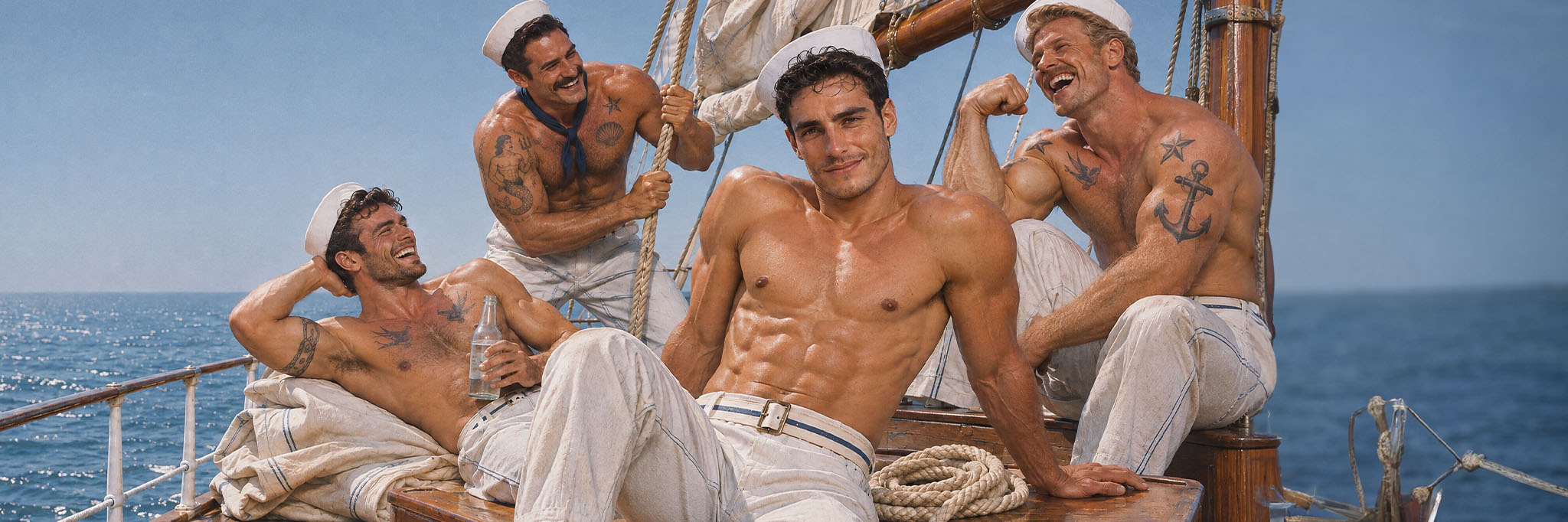
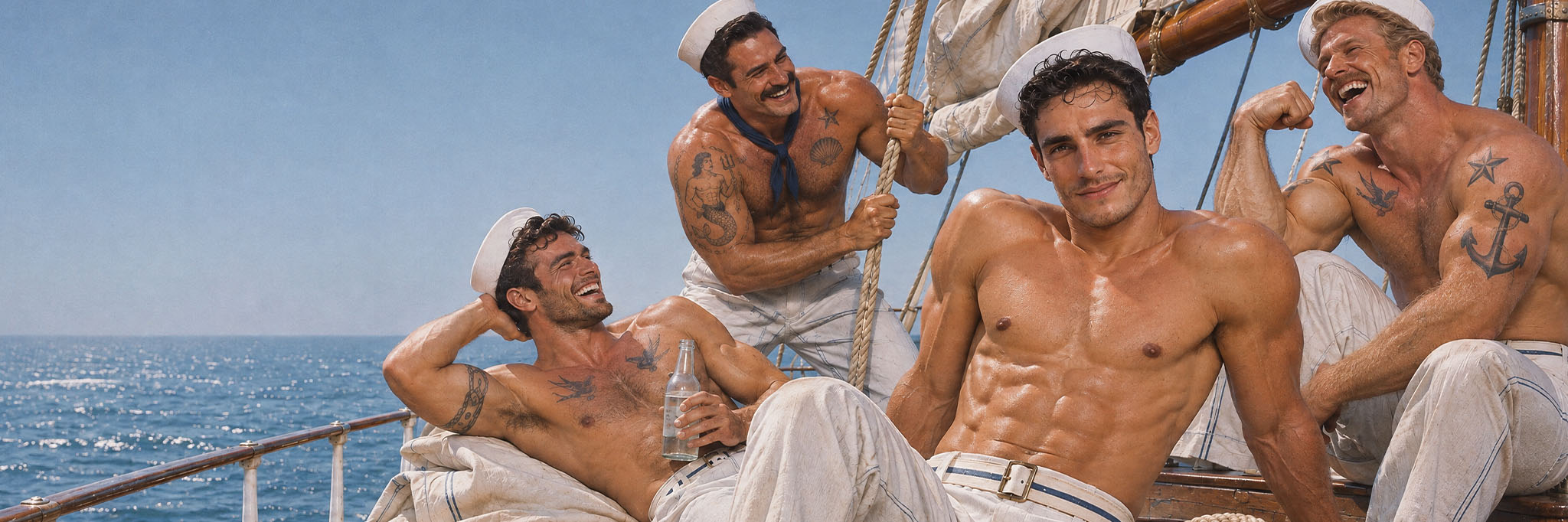
Sailors have been gay sex symbols for decades. From erotic illustrations to disco hits, they’ve sailed straight into our fantasies. And let’s be fair, the uniforms alone explain quite a lot.
There’s an old saying that sailors have a girl in every port. But who says they were only interested in girls?
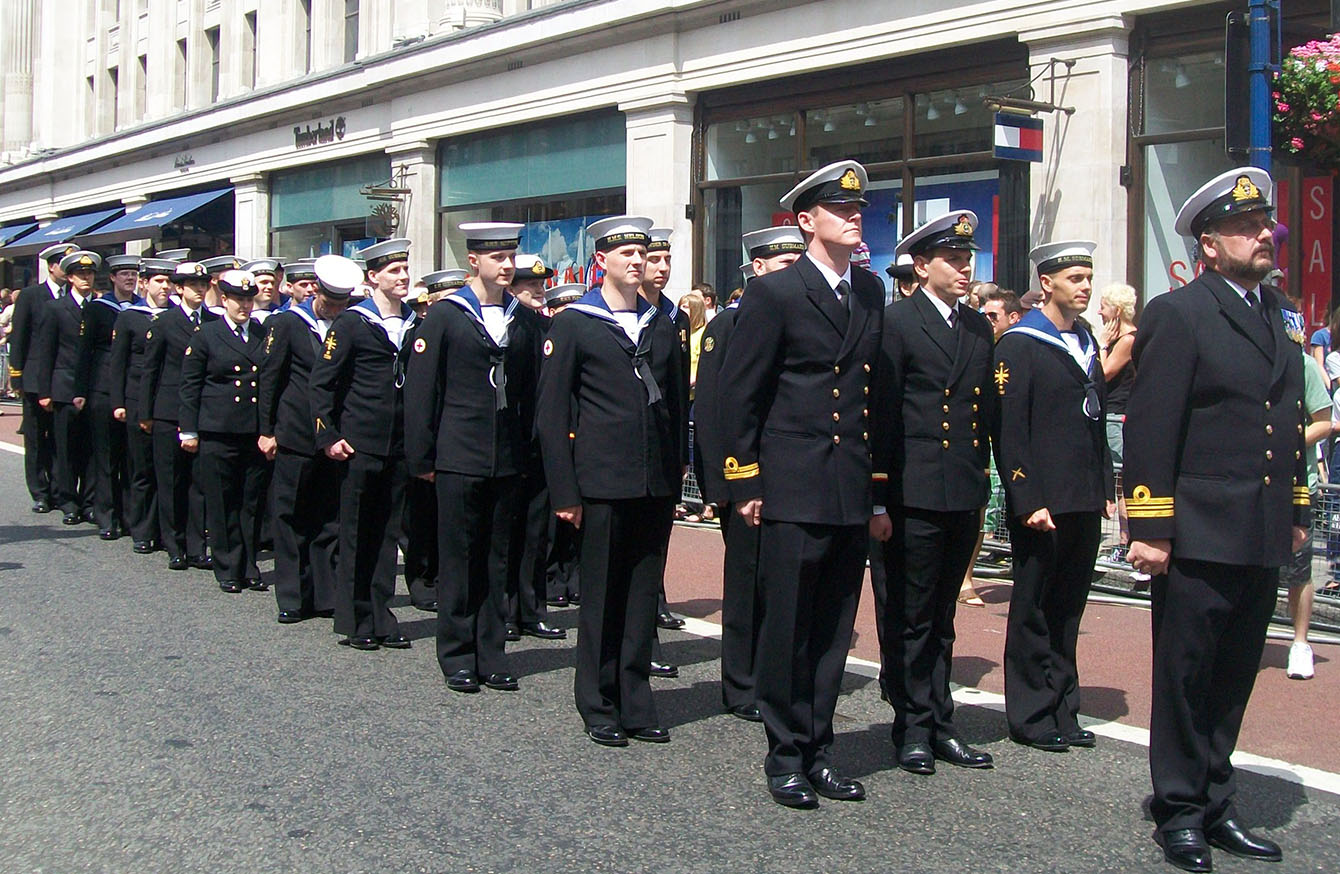
From being banned from serving to marching with Pride! Until 2000, gay people were banned from serving in the British armed forces. By 2009, Royal Navy sailors were proudly marching through London Pride. Photo: AnemoneProjectors / CC BY-SA 2.0. (Wikimedia Commons)
Imagine spending months at sea, surrounded by nothing but water. And men. Lots of men.
For centuries, life aboard sailing ships was an almost entirely male affair. Sailors worked together, ate together, slept in cramped quarters, and sometimes spent years away from home.
Not exactly the most comfortable living arrangements. But for a gay sailor, all that male company must have offered some interesting distractions. 👀
Of course, most sailors were simply trying to survive the hard work, terrible weather and questionable food. But when you put hundreds of men together for months, more intimate or even sexual bonds are hardly surprising.
After all, men have always been attracted to other men, whether on land or at sea. 🌊
More Than Just Shipmates
Back in 1934, American artist Paul Cadmus caused quite a scandal with his painting The Fleet’s In!, depicting U.S. Navy sailors drinking, flirting, and enjoying themselves during shore leave.
Look closely, and you’ll also find some subtle references to homosexuality.
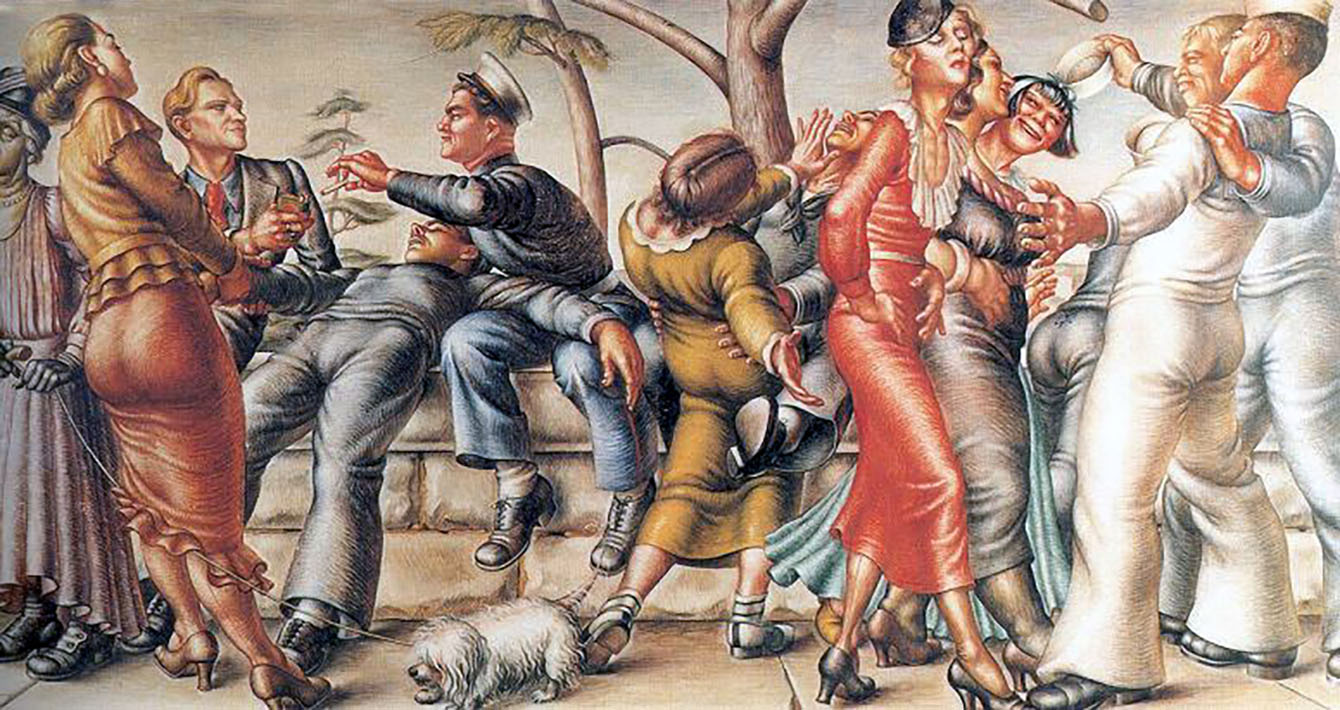
“The Fleet’s In!” by Paul Cadmus, 1934. On the left, a blond man appears to flirt with a serviceman, offering him a cigarette. On the right, two sailors have their arms around each other. These subtle gay references are easy to miss, but the U.S. Navy wasn’t amused by this rather naughty portrayal of its men. (Photo: Wikimedia Commons)
A few years later, World War II brought millions of young American men into the military, including the Navy. And among them were, of course, many gay men.
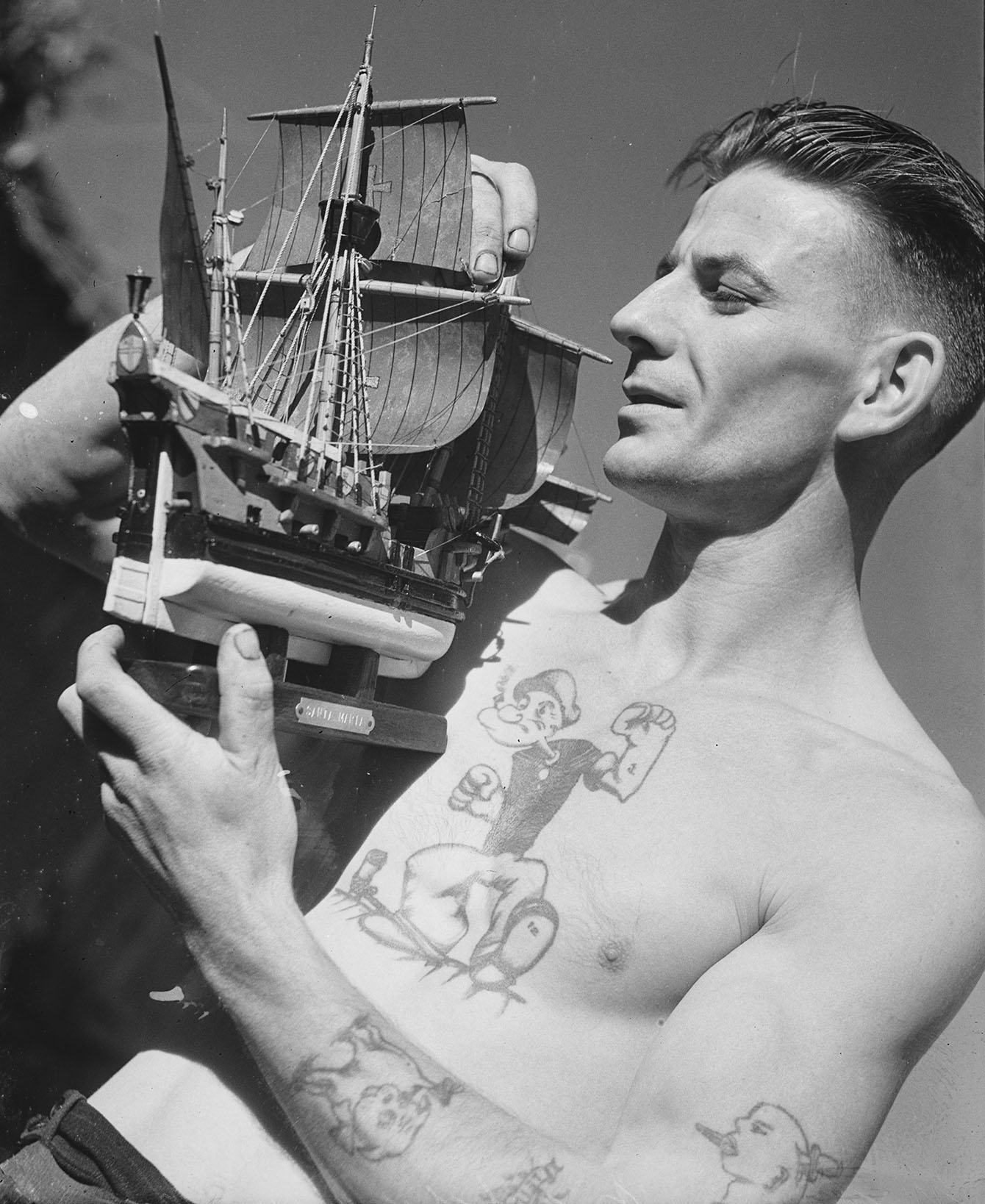
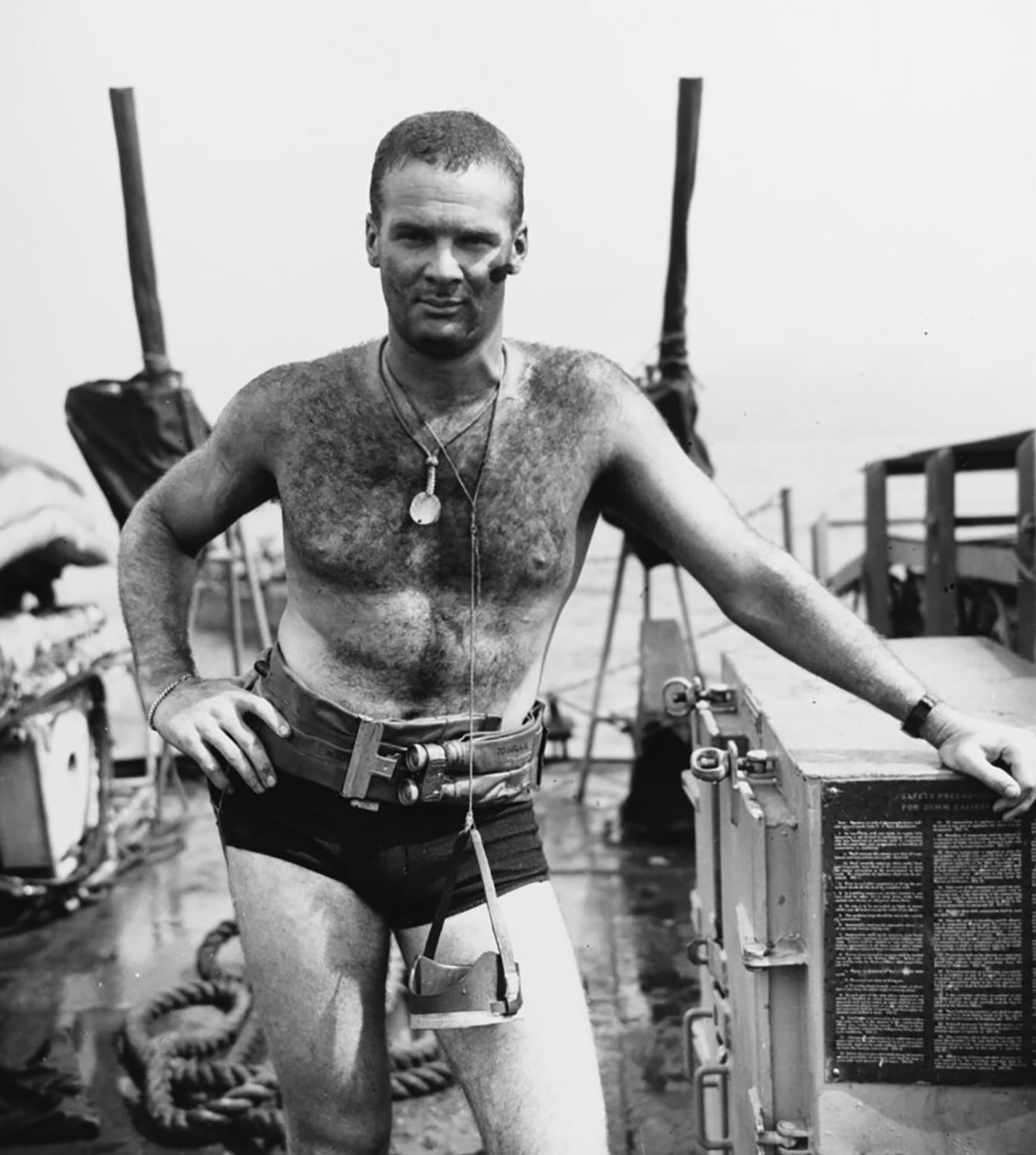
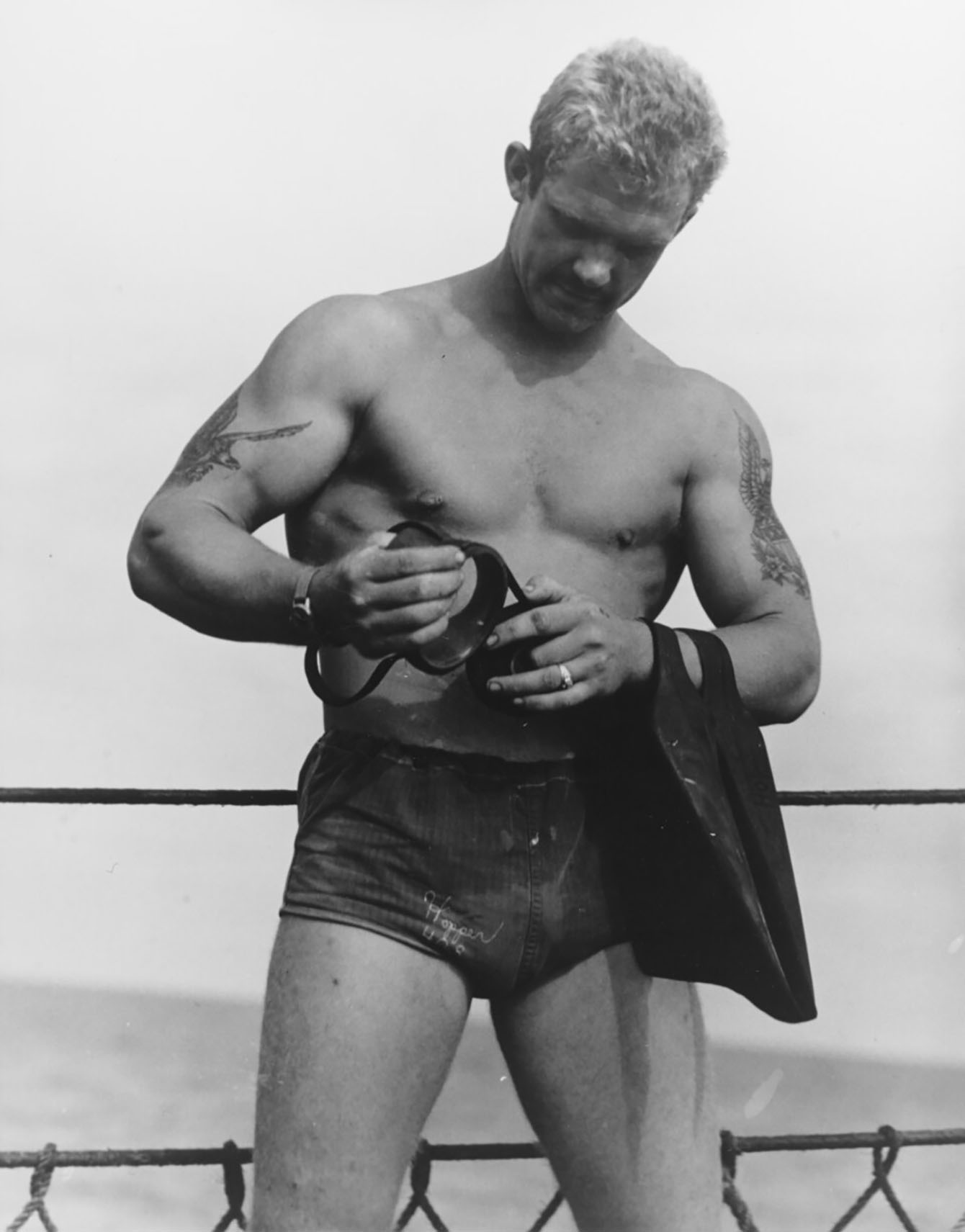
Some eye candy from the archives: handsome, bare-chested and tattooed men from the 40s. 🥵 (Photos: Wikimedia Commons)
For some, joining the Navy meant meeting other gay men for the first time, exploring their sexuality, and sometimes forming romantic relationships.
Of course, homosexuality was officially forbidden in the military. Getting caught could mean interrogation, punishment, or discharge, so men had to be discreet about their feelings.
Despite the risks, gay servicemen found ways to recognise and connect with one another. Some of the friendships and networks formed during the war continued after 1945, helping gay communities grow in American cities.
Not Your Average Cruise
Meanwhile, elsewhere at sea, things were becoming a little more interesting for some gay men.
During the 1950s, 1960s and 1970s, some British passenger ships developed surprisingly lively gay communities. Similar experiences have also been documented among Scandinavian merchant seafarers.
While homosexuality was still widely condemned on land, certain ships became places where gay men could enjoy much greater freedom.
And they certainly made the most of it.
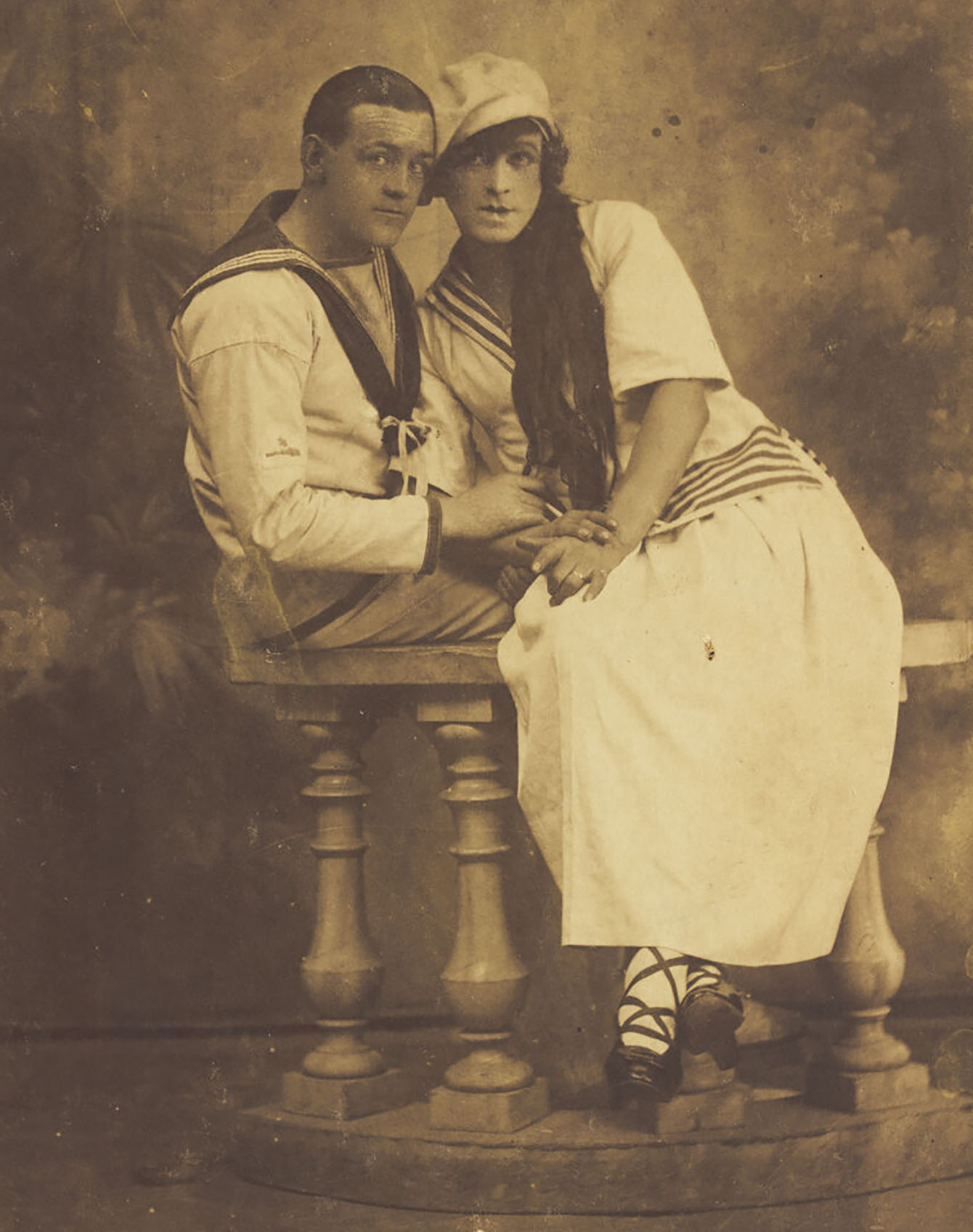
A little romance on deck? Two Royal Navy sailors posing together circa 1910-1919, one wearing a wig and makeup. Sailors were dressing in drag long before the 50s! (Photo: Wellcome Collection)
Gay crew members, particularly stewards and waiters on luxury passenger liners, formed their own social circles. There were friendships, romances, gossip, parties, and even drag performances.
Some sailors dressed in elaborate gowns, performed for their colleagues, and adopted glamorous stage personas. On certain ships, these performances became a celebrated part of life aboard.
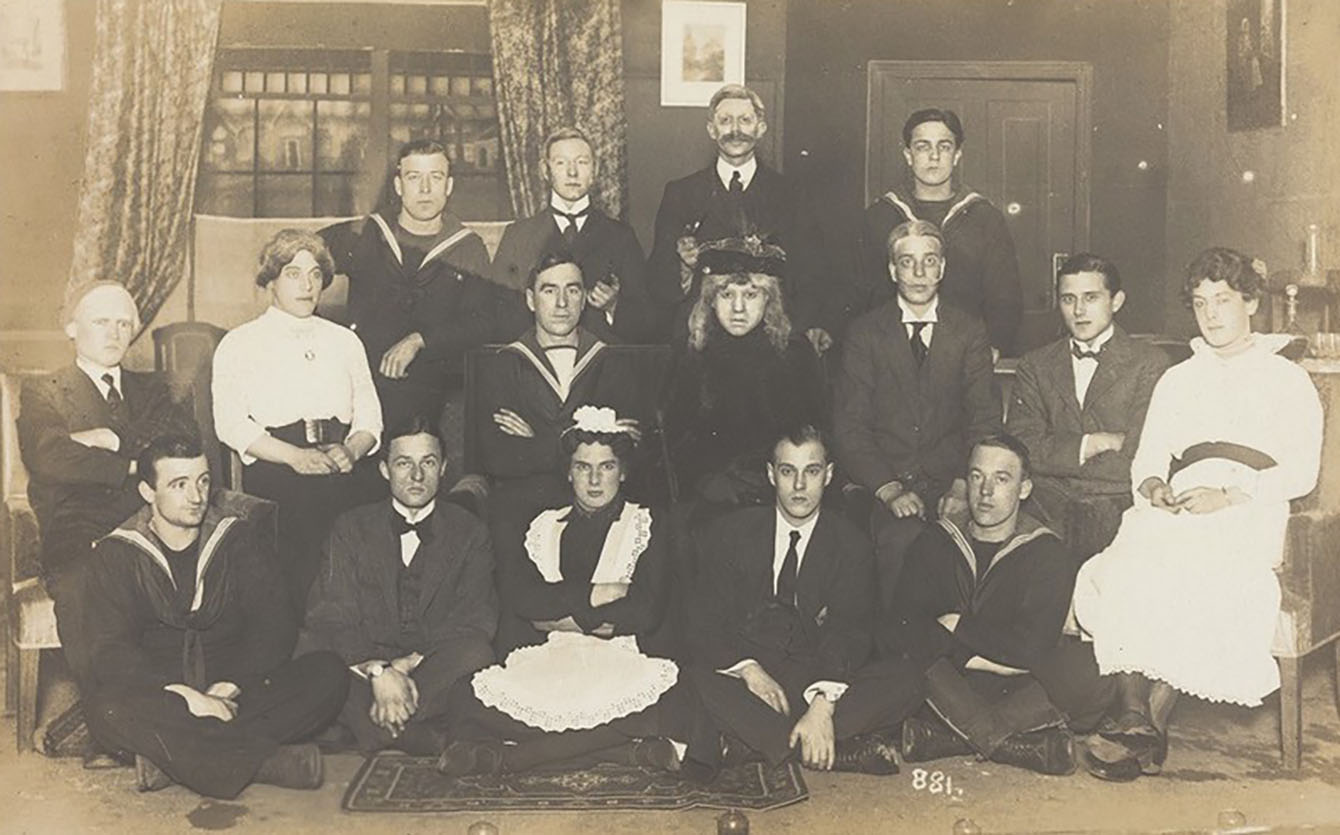
Royal Navy sailors, some dressed in drag, posing on a theatrical set, circa 1910–1919. (Photo: Wellcome Collection)
There was even a special way of communicating.
Some British gay sailors used Polari, a form of slang popular in gay circles at the time. It allowed men to joke, gossip, and communicate discreetly in a world where being openly gay could still be dangerous.
And the adventures didn’t necessarily end when the ship reached port.
During shore leave, gay crew members could explore bars, clubs, and meeting places in cities around the world. For some, working at sea meant discovering a kind of gay life they could barely imagine back home.
There’s a wonderful irony in all this: while many gay men had to hide who they were on land, some found more freedom to be themselves aboard a ship.
Who would have thought that some of the most fabulous gay parties of the 20th century happened somewhere in the middle of the Atlantic?
From Sailors to Sex Symbols
So we’ve established that gay life at sea was very much a reality. But how did the sailor become such a common gay fantasy?
As you might expect, popular culture played an enormous role in turning that image into an icon.
One of the most influential figures was Tom of Finland, the Finnish artist whose homoerotic illustrations helped shape modern gay visual culture.
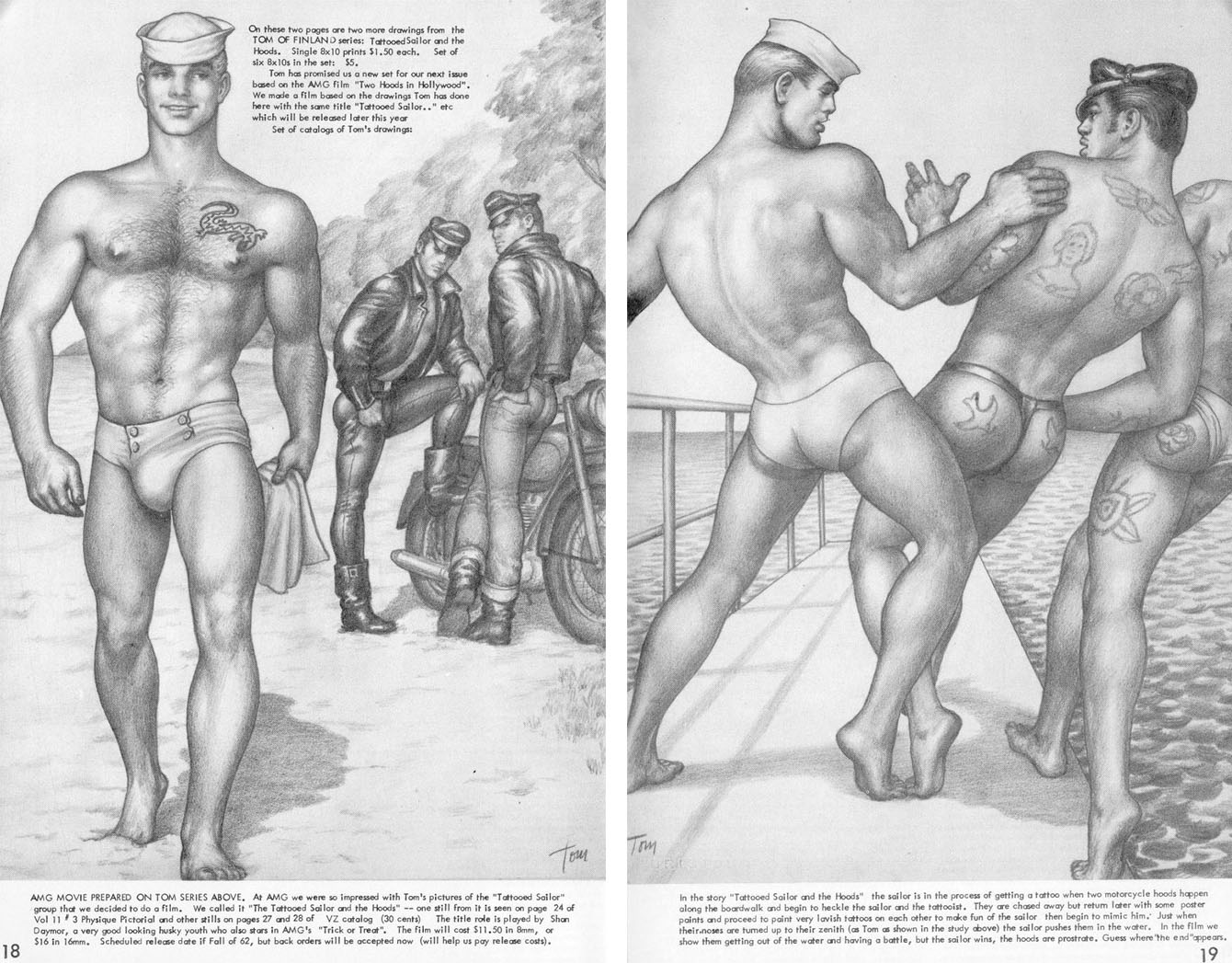
A naughty encounter between a sailor and two bikers. Two illustrations from Tom of Finland’s “Tattooed Sailor and the Hoods” series. Published in “Physique Pictorial” in 1962. (Photos: Wikimedia Commons)
His drawings celebrated exaggerated masculinity: muscular bodies, leather jackets, boots, tight trousers, and, of course, sailors.
In Tom’s world, traditionally masculine figures became objects of open gay desire. His men were confident, sexy, and unapologetically attracted to other men.
And the sailor, with his unmistakable uniform, fitted perfectly into that world.
Then came the Village People.
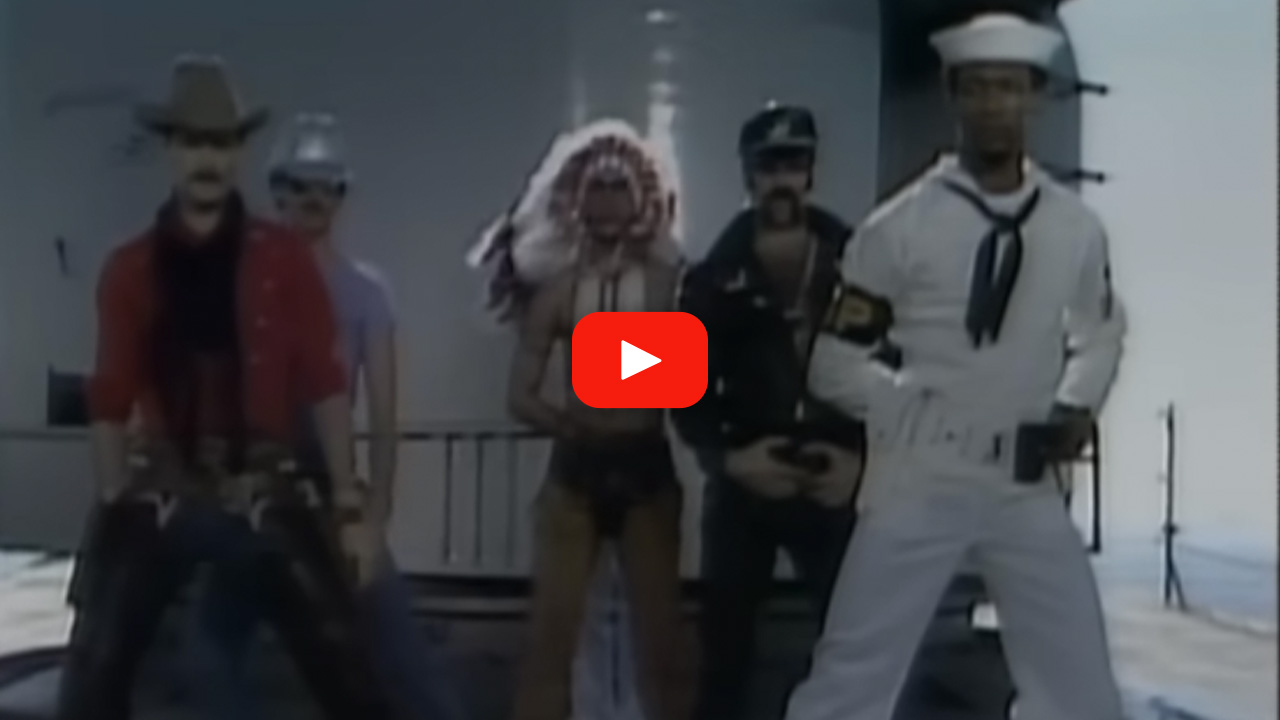
A little disco, a lot of charm! Watch the Village People’s iconic “In the Navy” music video.
The legendary disco group became famous in the late 1970s for their characters inspired by traditionally masculine stereotypes: the policeman, the construction worker, the cowboy, the leather man, and, naturally, the sailor.
Their 1979 hit In the Navy turned the sailor image into an international pop-culture phenomenon.
Suddenly, the sailor wasn’t just a figure in gay erotic art. He was dancing his way into mainstream culture.
And the fascination didn’t stop there.
Fashion designer Jean Paul Gaultier later embraced the sailor aesthetic, turning the classic striped shirt into one of his signature looks. His famous Le Male perfume, launched in 1995, even came in a bottle shaped like a muscular male torso dressed in sailor stripes.
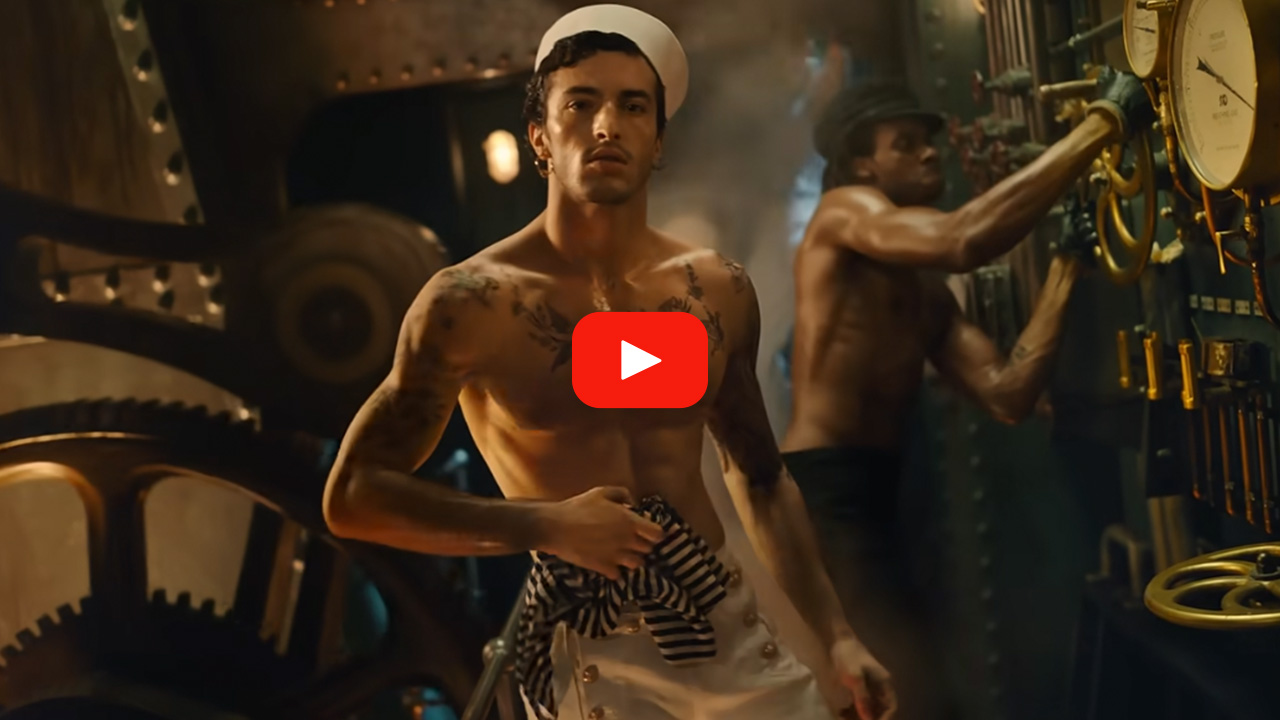
Ahoy, handsome! Jean Paul Gaultier brings the sexy sailor fantasy to life in his “Le Male” fragrance commercial.
From the decks of historical ships to gay illustrations, disco, fashion, and advertising, the sailor had become one of the most recognisable male sex symbols around.
All Aboard!
Turns out, the sailor fantasy isn’t entirely fantasy after all. From secret romances to wild parties at sea, there’s plenty of real gay history behind those sexy uniforms.
And let’s face it, a ship full of handsome men, far from shore, with nowhere else to go? That’s exactly the kind of cruise we’d happily buy a ticket for. 😉
See you on board, Romeos!
Your nautical ROMEO Team ⚓️