
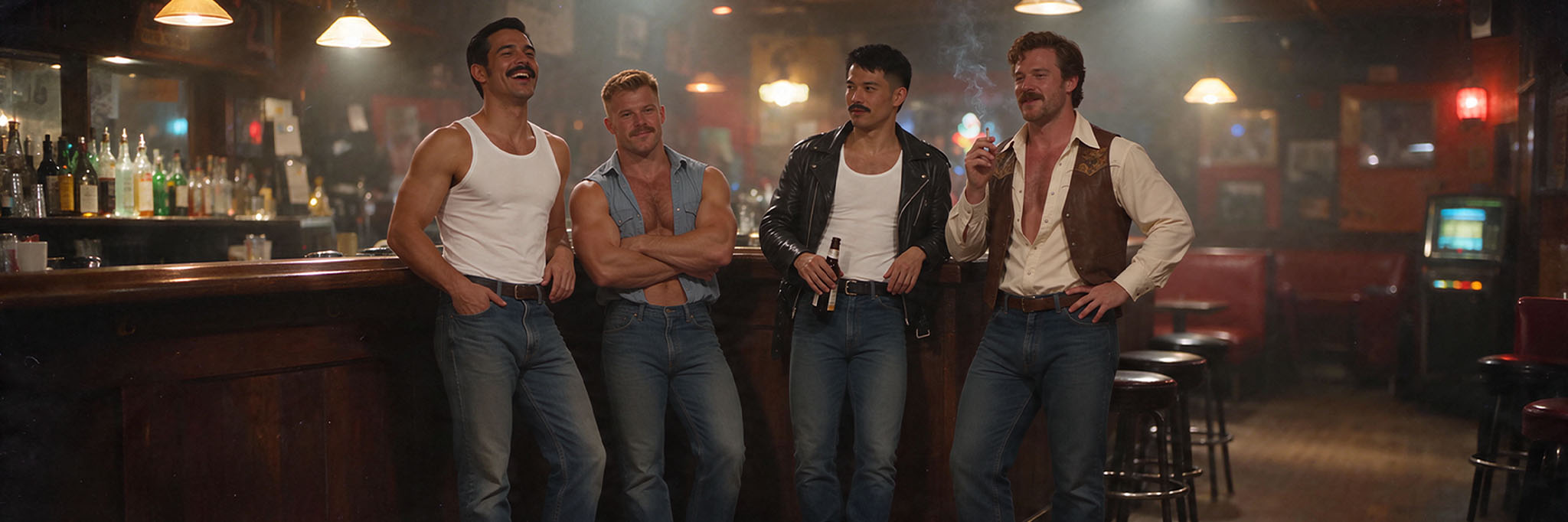
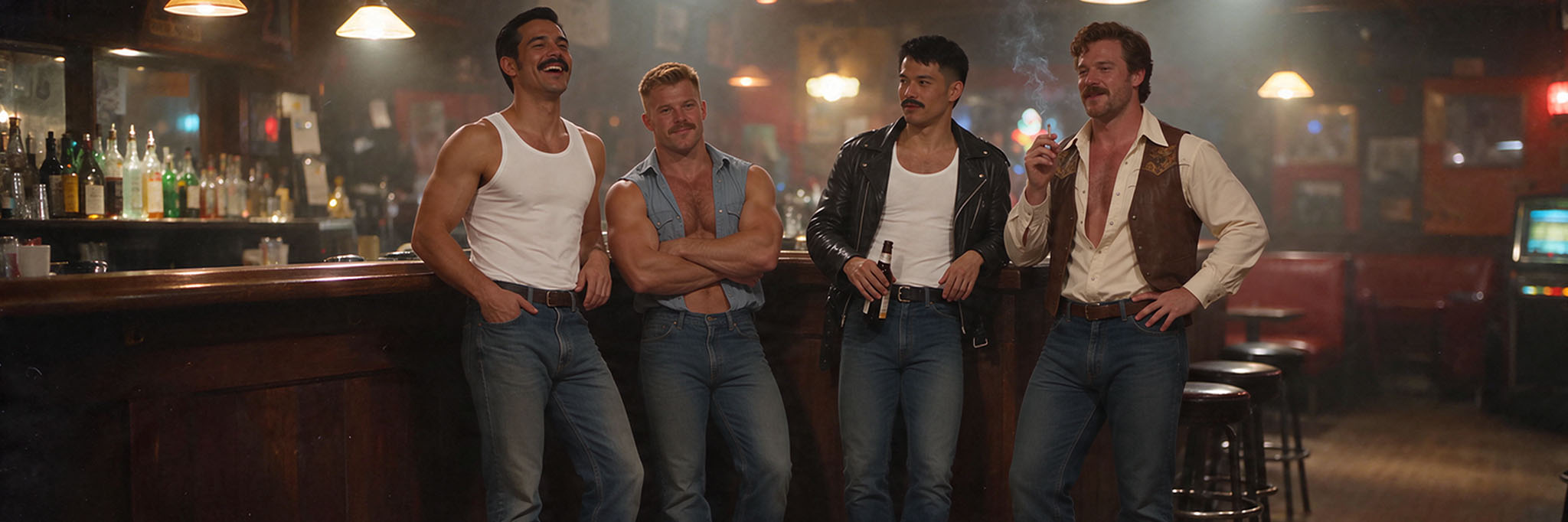
Hairy or smooth? To shave or not to shave? It’s an endless debate among gay men, and we even wrote a blog about it earlier this year.
And lately, one particular type of facial hair has been making a comeback: the moustache. From celebrities to dating profiles, more and more guys are giving their upper lips a little extra attention. And we’re certainly not complaining. 👀
But did you know that the moustache has quite a history in gay culture?
Long before today’s comeback, a thick moustache was practically a trademark of a certain kind of gay man. From San Francisco’s gay scene in the 1970s to porn stars, disco icons and Freddie Mercury, this little patch of facial hair became a serious sex symbol.
So how did the moustache become so gay, and why are we still obsessed with it today?
The Rise of the Castro Clone
Picture San Francisco in the 70s. The gay liberation movement was growing, the Castro District was becoming a famous gay neighbourhood, and a particular look was taking over its streets and bars.
Short hair, tight Levi’s jeans, fitted T-shirts, leather jackets, boots and, of course, a thick moustache. Meet the Castro Clone.
View this post on Instagram
In his 1977 series “Gay Semiotics”, photographer Hal Fischer explored the fashion codes of San Francisco’s gay scene, showing how details could communicate more than just personal style.
The name came from the fact that so many men looked almost identical, as if someone had been making copies of the same handsome guy. And while the term wasn’t always meant as a compliment, the look became one of the most recognisable styles in gay culture.
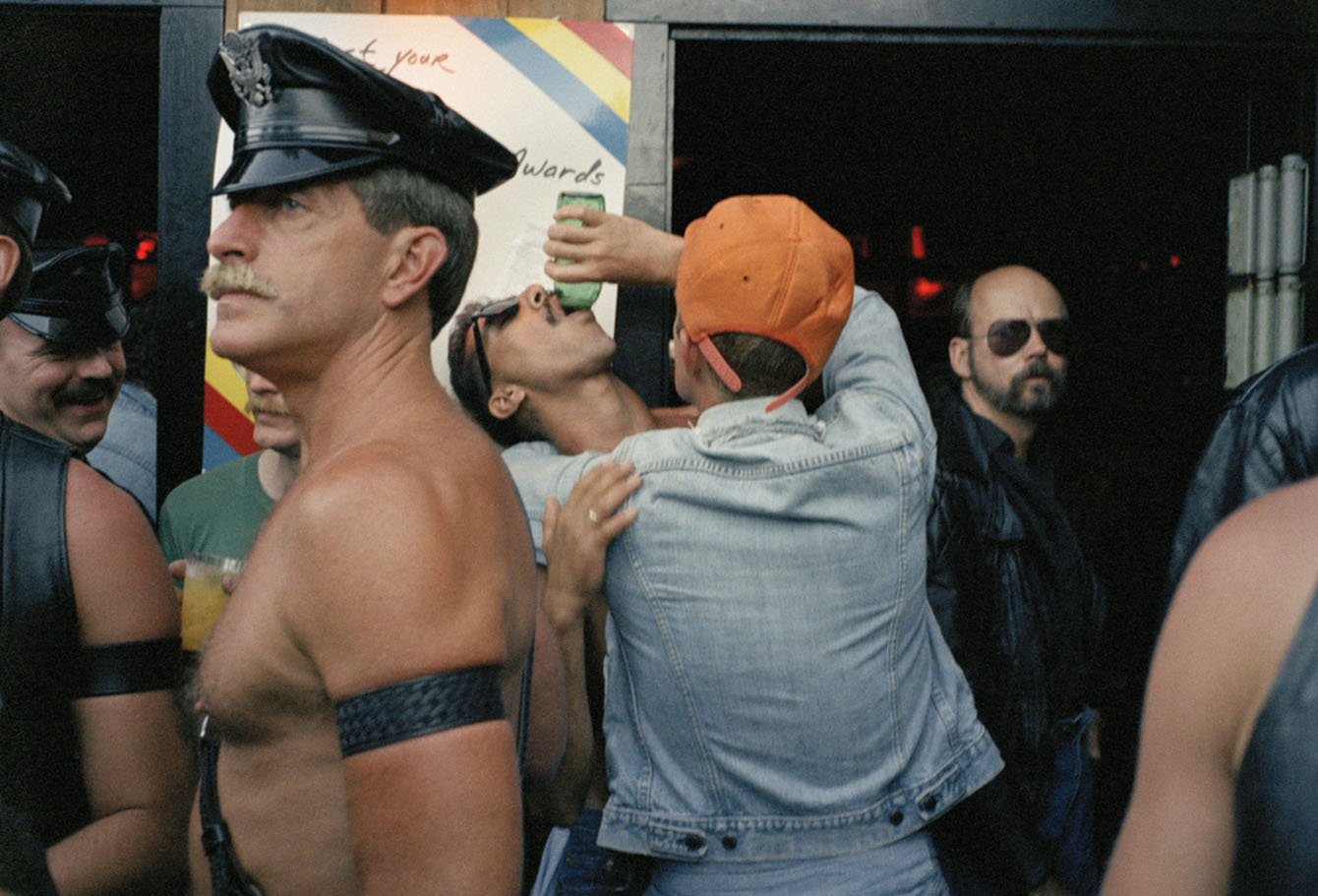
A decade later, but a familiar style. Moustaches, leather and denim at San Francisco’s Eagle bar in 1987. Photo: Doug Ischar / CC BY-SA 3.0 (Wikimedia Commons).
There was more to it than fashion. For years, gay men had often been portrayed as feminine or weak. The Castro clones embraced traditionally masculine looks, taking the image of the rugged American working man and making it unmistakably gay.
And the moustache? It was right there in the middle of it all, turning an ordinary bit of facial hair into a symbol of gay confidence and sex appeal
Pop Icons & Pornstaches
Of course, gay men didn’t suddenly discover moustaches in the 70s. The Castro Clone brought together styles that had already been around for years.
The rugged look had roots in earlier greaser, biker and leather cultures. Think of Marlon Brando in The Wild One (1953), with his leather jacket, jeans and rebellious attitude. His famous biker image also inspired an artist who would become a legend in gay culture: Tom of Finland.
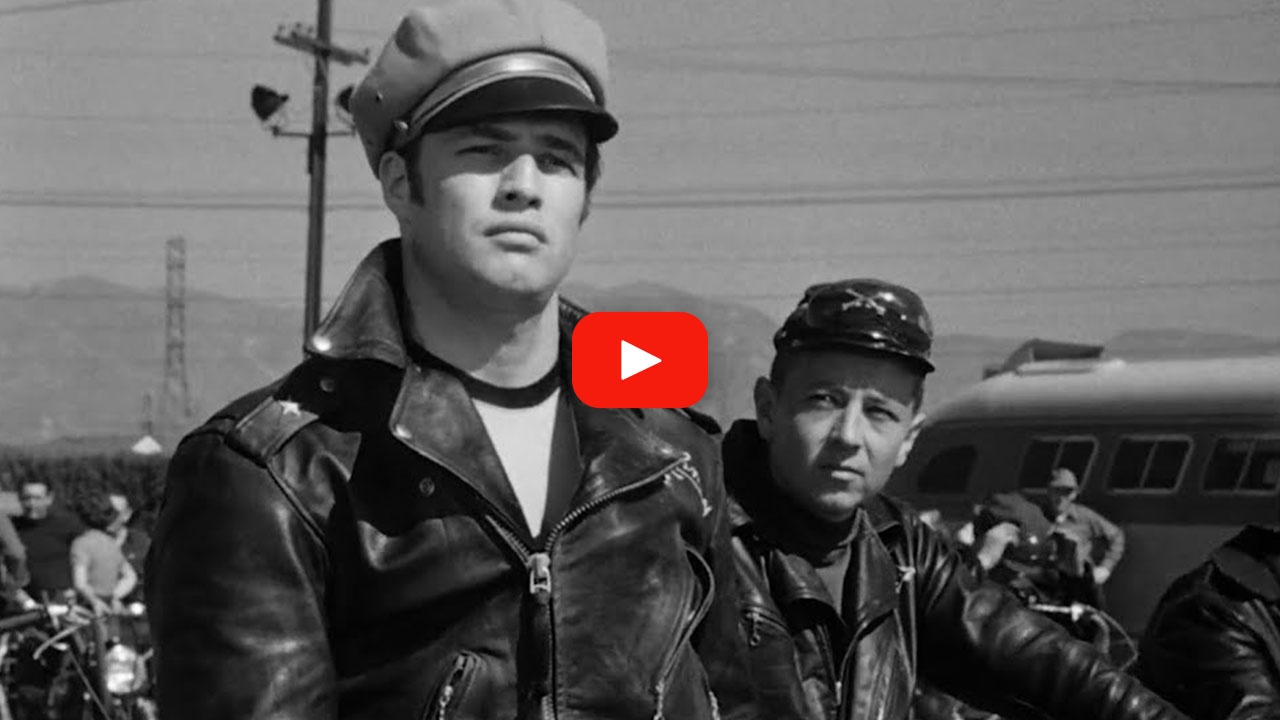
Marlon Brando’s iconic biker look in “The Wild One” (1953) helped inspire a whole generation. Sadly, no moustache here, but we’ll forgive him this time…
Earlier in the 50s, Tom of Finland was already drawing muscular men in leather, uniforms and workwear, often with impressive moustaches. His illustrations turned traditionally masculine figures into openly gay fantasies, helping establish an aesthetic that would become instantly recognisable.
View this post on Instagram
Cowboys, leathermen and plenty of impressive moustaches! This 1982 illustration by Tom of Finland brings together some of his most iconic gay fantasies.
And as the look gained popularity, it wasn’t just appearing in gay bars. Moustached men were everywhere in gay erotic photography, magazines and adult films.
Publications such as Mandate celebrated hairy, rugged men, while performers like Al Parker helped make the look an object of desire. A moustache could make a handsome guy look even more rugged, mature and, well, ready for action. 😏
And that brings us to a particularly fitting term: pornstache. The nickname refers to the thick moustaches associated with male porn stars of the 70s and 80s, often worn without a beard. It wasn’t exclusively a gay thing, and the nickname itself came later, but the association between moustaches, porn and sex appeal certainly stuck.
But the moustache didn’t stay inside gay magazines and clubs for long. It was about to become a pop culture superstar.
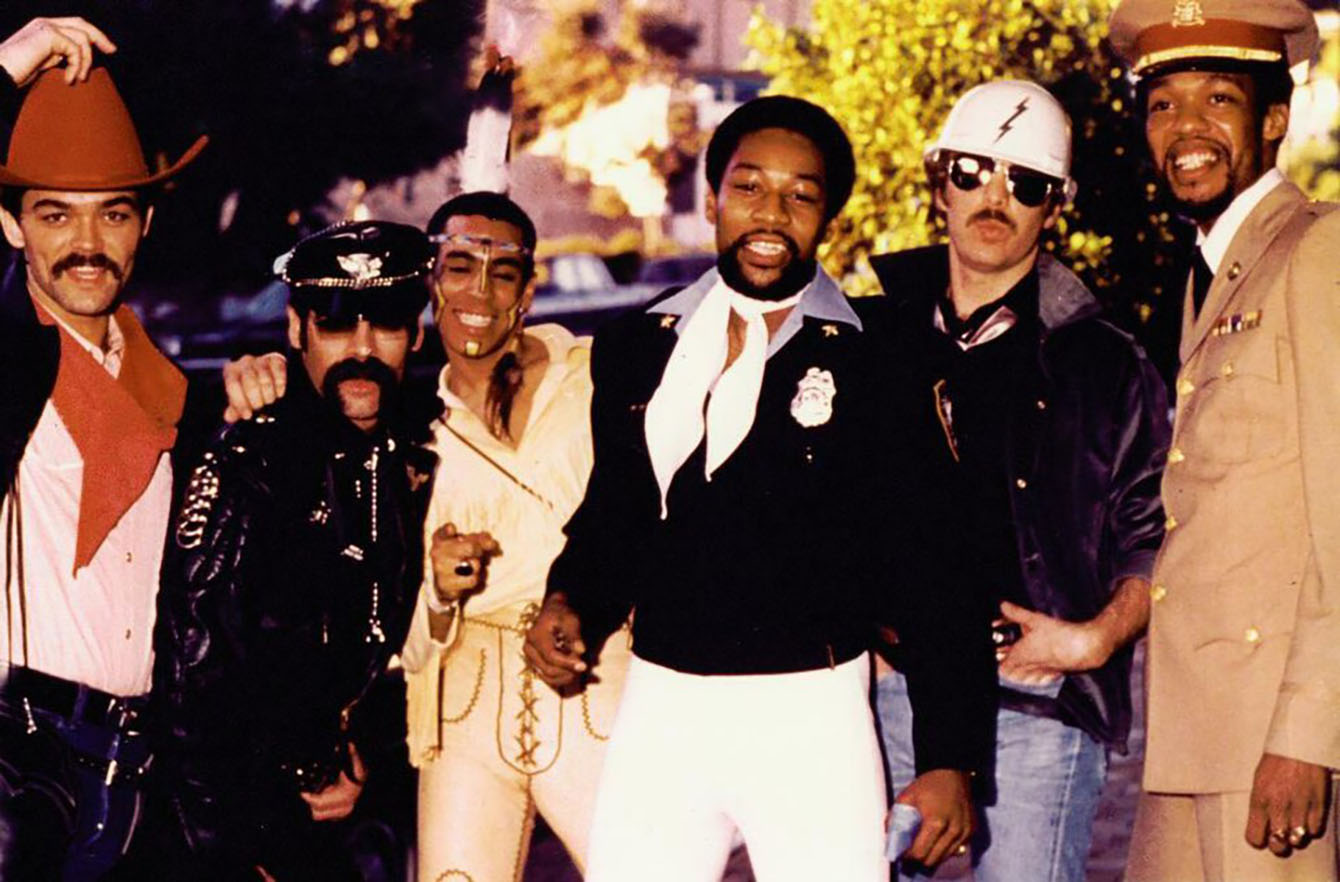
The original Village People in 1978. Photo: Mario Casciano / CC BY-SA 3.0 (Wikimedia Commons).
When the Village People came together in the late 70s, their exaggerated macho characters, iconic costumes and impressive moustaches helped bring the look into mainstream pop culture.
In fact, the casting advertisement reportedly read: “Macho Types Wanted: Must Dance and Have a Mustache.”
Yes, having a moustache was practically a job requirement!
And then there was Freddie Mercury. When the Queen frontman adopted his famous moustache in 1980, his new look closely resembled the Castro Clone aesthetic. Not everyone was impressed, though. Some fans reportedly threw disposable razors onto the stage, hoping he’d shave it off.
Luckily for us, Freddie kept the moustache, and it became one of the most iconic looks in rock history.
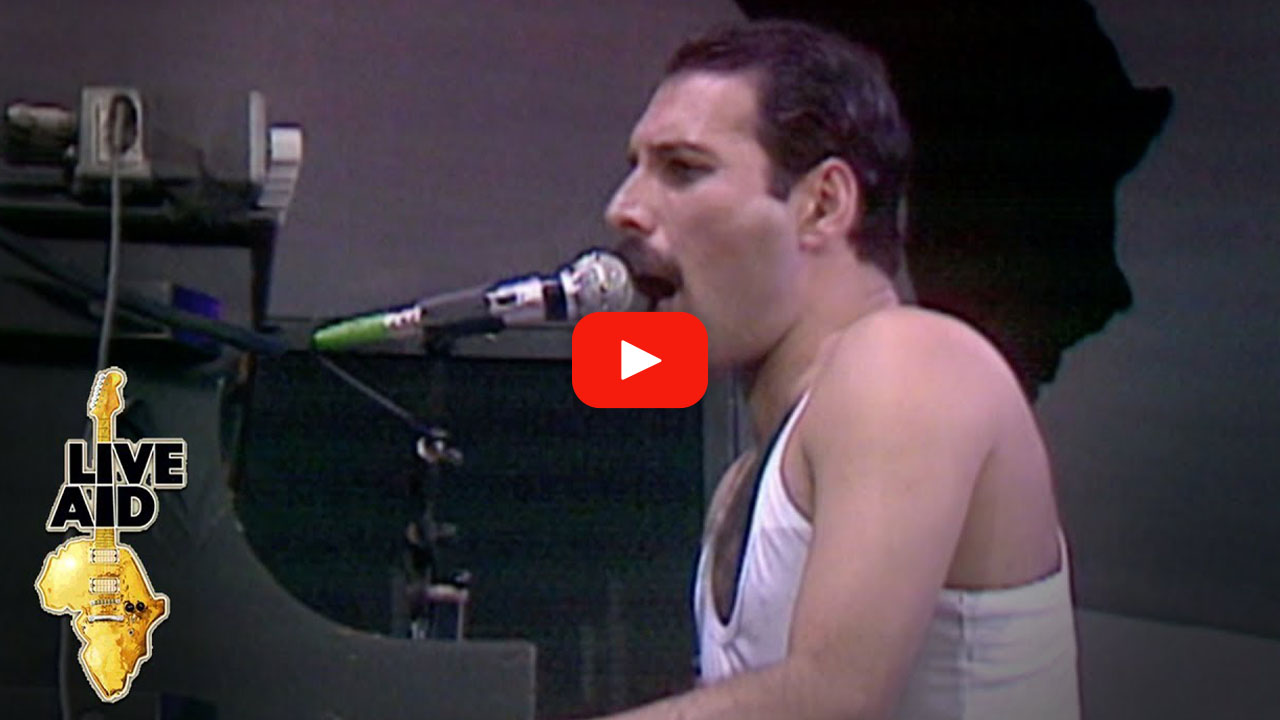
Watch Queen perform “Bohemian Rhapsody” at Live Aid in 1985, one of the most legendary performances in rock history. 👑
By the 80s, the moustache had conquered gay clubs, erotic magazines, disco stages and stadium concerts. Not bad for a little facial hair!
Hairy, Bare and Everything in Between
Of course, gay fashion didn’t stop evolving in the 80s. And neither did the moustache.
As different looks became popular, facial hair found new admirers. The emerging bear community celebrated hairy bodies, thick beards, moustaches and bigger, stockier men. 🐻 Meanwhile, the contrasting twink aesthetic favoured younger-looking, slimmer guys, often with smooth faces and little body hair.
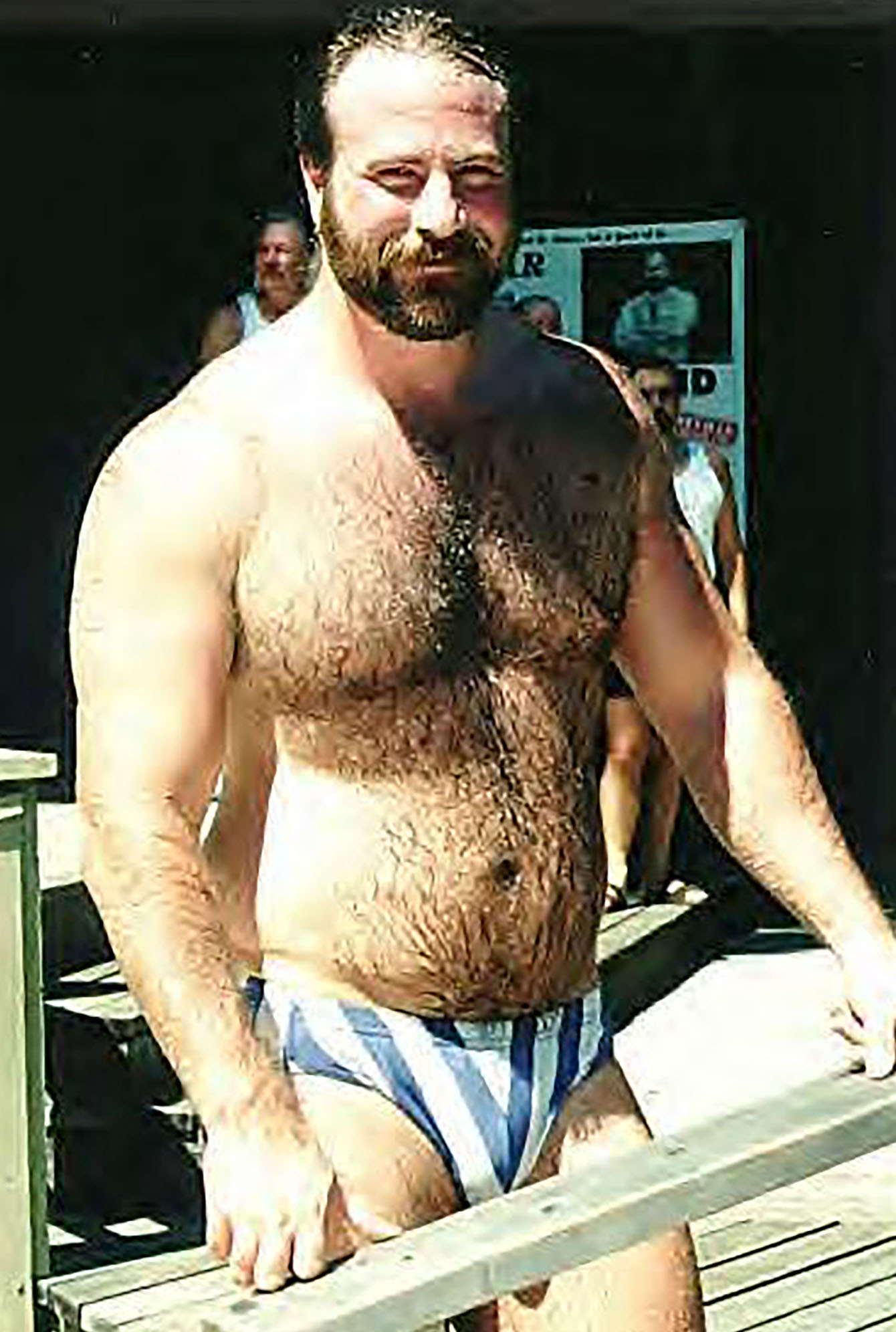
Jack Radcliffe, one of the best-known faces of gay bear culture, at Bear Bust in 1999. Photo: Lynn Ludwing / CC BY 3.0 (Wikimedia Commons).
There was no longer just one fashionable kind of gay man. And that was a good thing, because not everyone had been a fan of the Castro clones in the first place.
While the clone look had helped challenge old stereotypes, its popularity also created new expectations. The emphasis on looking traditionally masculine sometimes made more feminine or flamboyant men feel unwelcome.
One famous example was the disco legend Sylvester, who embraced glamorous outfits, makeup and an openly feminine style. He stood in sharp contrast to the macho Castro clones and faced hostility from some men in that scene.
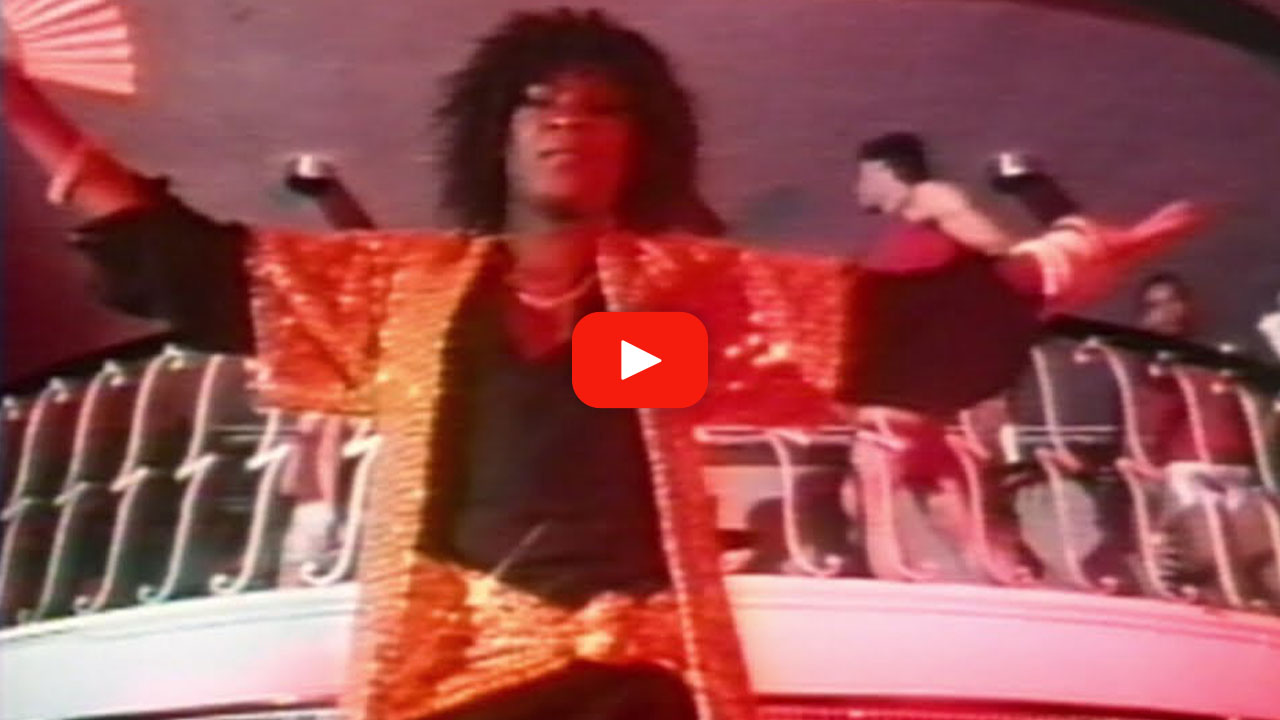
The Queen of Disco! 🪩 Sylvester embraced glamour and glitter in his 1978 hit “You Make Me Feel (Mighty Real)”.
After all, what’s the point of breaking free from one stereotype only to replace it with another?
Whether you prefer a thick moustache, a full beard, a baby-smooth face or a little glitter, there’s room for everyone. Being gay has never required a particular haircut, body type or amount of facial hair.
Back in Style
Fast-forward to today, and the moustache is enjoying another moment in the spotlight.
From Pedro Pascal and Jacob Elordi to younger stars and athletes, moustaches have made their way back into fashion. Some are thick and bushy, others thin and carefully trimmed. And what once looked like something straight out of a 70s gay bar is now appearing on red carpets and social media feeds.
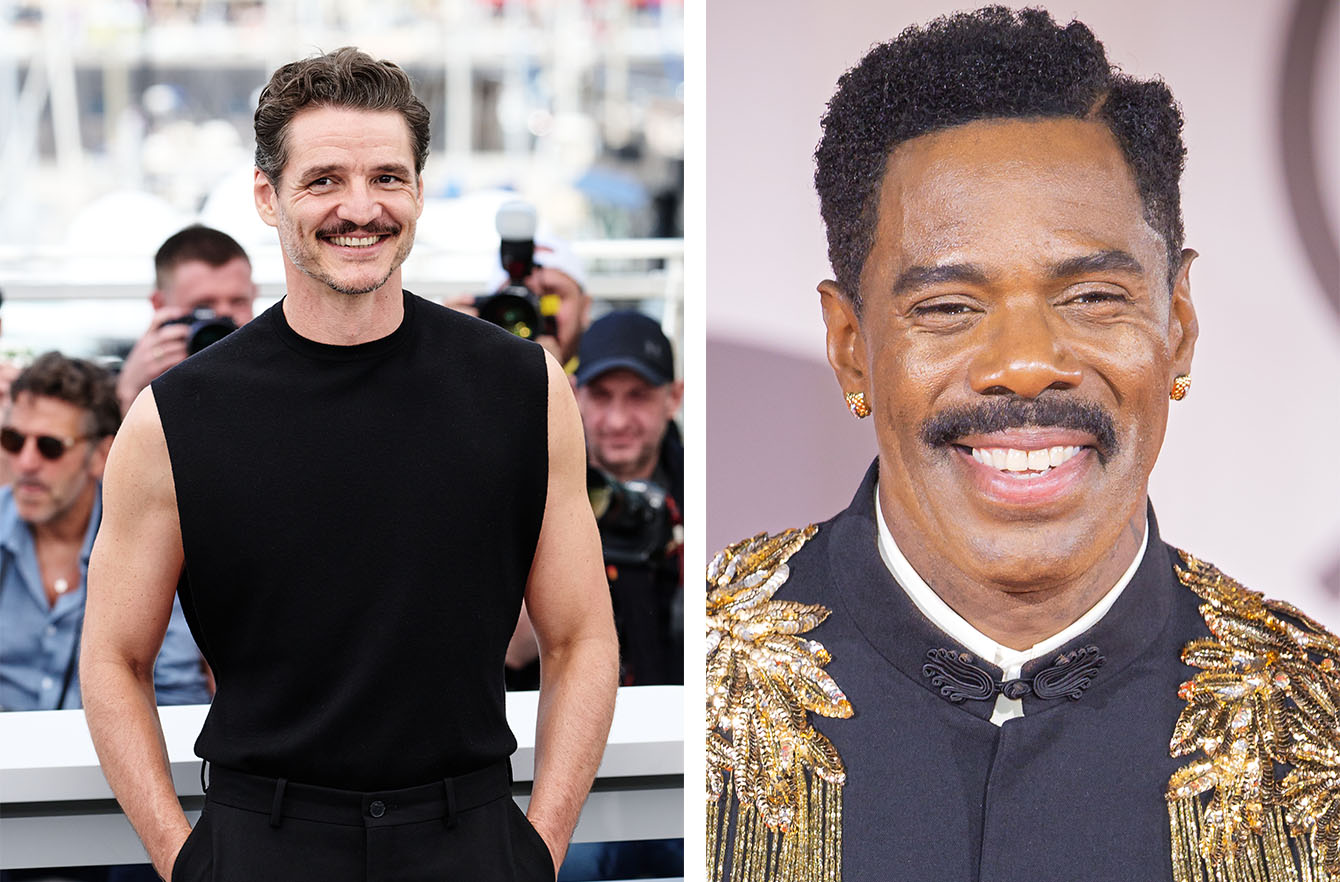
Red carpet moustaches! 💈 Pedro Pascal at Cannes and Colman Domingo at Venice, both in 2025. Photos: Gabriel Hutchinson / WikiPortraits & LucaFazPhoto / CC BY-SA 4.0 (Wikimedia Commons).
Of course, today’s moustaches don’t necessarily carry the same meaning they did in the Castro District. For some guys, it’s a fashion statement. For others, it’s about looking more mature, more masculine or simply trying something new.
And for plenty of gay men, a good moustache is still a major turn-on.
From the Castro clones to today’s dating profiles, the moustache has certainly been on quite a journey.
And whether you love one, grow one or just want to get close enough to find out if it tickles, one thing is clear: the gay moustache still has plenty of fans. 😉